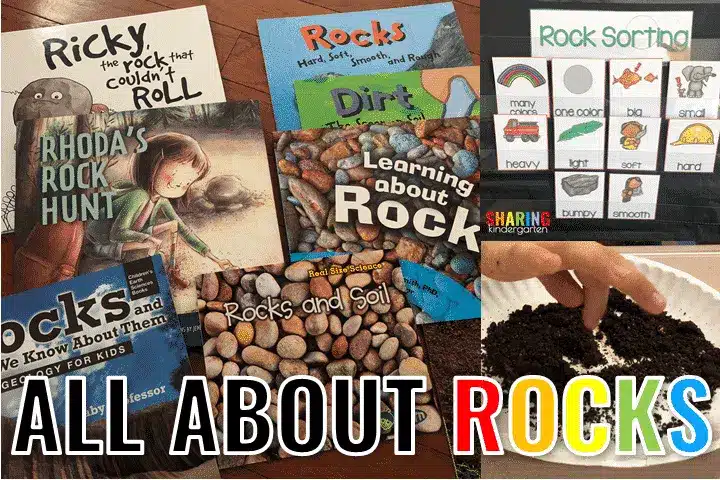
Hands-On Rock Activities: Rocks aren’t just found on the ground because they can also be found in your science center, your literacy block, and even your math lessons! If you’re looking to spark curiosity and excitement in your lower elementary students, hands-on rock activities are the perfect way to make learning come alive.
Hands-On Rock Activities
As a teacher, you know that little learners thrive when they can touch, explore, and engage with real materials. That’s why this post is packed with engaging, standards-aligned, hands-on rock activities that are perfect for kindergarten through second grade. Whether you’re studying Earth science or just want to add some geology-themed fun to your classroom, these ideas will help your students dig into learning—literally! Check out these learning activities for earth sciences and science concepts. Let’s dive into engaging ways to investigate with hands-on geology activities to dive into the Earth’s materials. Here on TpT.
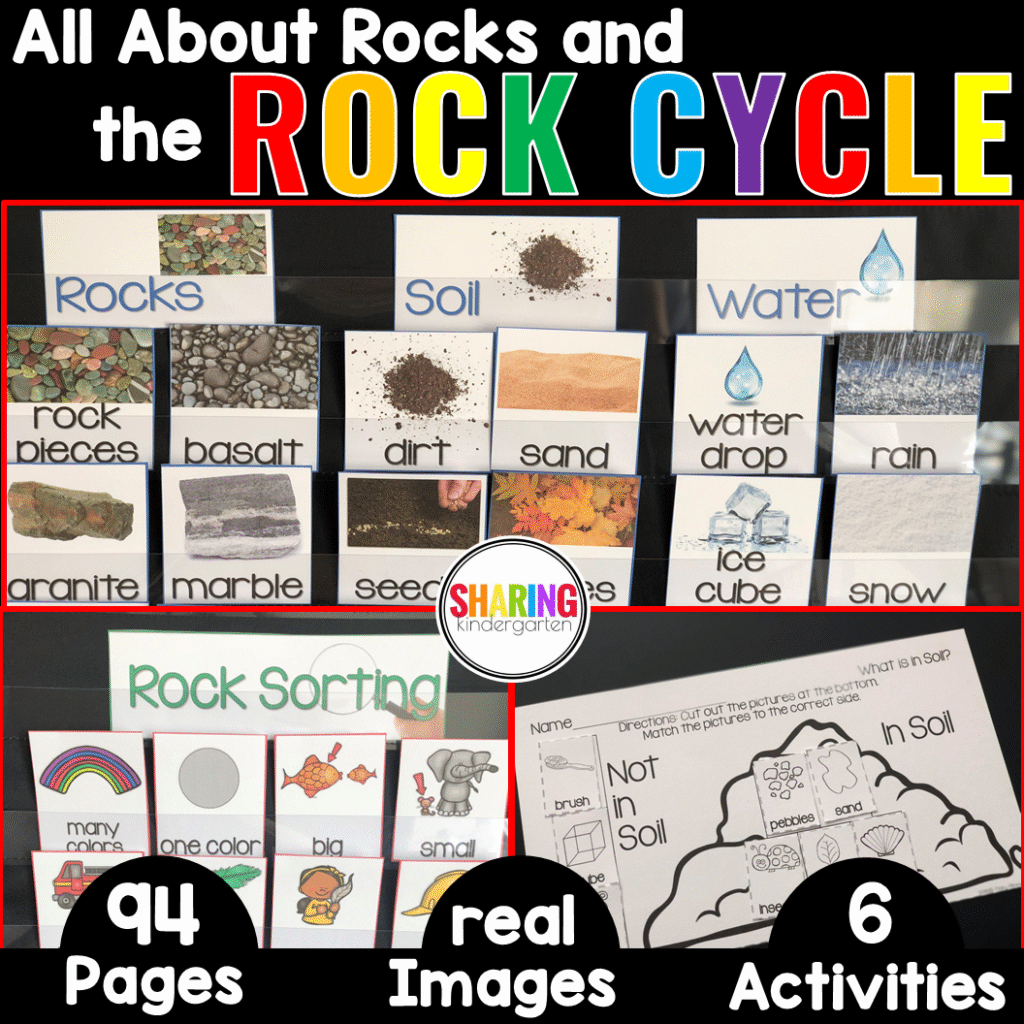
We will be going beyond learning about rock types, although we do have a lesson plan that can walk your learners through the Earth’s surface, different rocks, types of rocks, and all the stages of the rock cycle. These activities assume you have taught the rock cycle, Earth’s materials, and the main types of rocks.

1. Rock Sorting by Properties
Start with a collection of rocks from a local hardware store or craft supplier. Let students sort them by size, shape, color, texture, or luster. This simple activity builds observation and classification skills. Pair it with a magnifying glass and a simple recording sheet, and you’ve got a powerful hands-on rock activity that’s science standard gold!
In the past I have asked students to bring in 2 rocks from their homes. Many students just brought in the same rocks and we didn’t have a huge variety to pick from and honestly, this limited our sorting and vocabulary building. Therefore, now I use this rocks from this set on Amazon over and over again every year.
You can see these sorting mats we used. Each table was given a tray with 6 rocks in it and they got to decide together how to sort the rocks. Then, I change out the sorting mats to another way to sort the rocks and students work again to sort another way.
If you are thinking this skill covers our math sorting standard, you are correct. We also tie this lesson into measurement when we can by pulling out balance scales when needed and using our measurement terminology.
2. Rock Observation Journals
Give each student a small rock to examine over a week. Students can draw pictures, write descriptive words, and record how the rock feels or changes in different settings (like in water or under sunlight). This is a great way to integrate science and writing while building descriptive language. This is also a great way to cover the task of informational writing.

One of our standards in Kindergarten is “shades of meaning” which is a fancy way of saying to use bigger words to describe. What a perfect lesson to work on this. We can use various words to describe a “small” rock such as little, petite, tiny, and teeny.

3. Be a Little Geologist: Dig and Discover Gems
Channel your students’ inner scientists with this favorite activity—gem excavation! Give each student a small gem-dig kit or create your own using clay or plaster and hidden acrylic gems. Provide tools like wooden sticks or plastic digging tools and let your little geologists carve out their treasure.
You can grab small sets at the dollar store, but I have found and LOVE this set on Amazon, specifically because it of the variety of gems and classification cards. And it ends up being cheaper than the dollar store.

Once the gem is free, students can investigate it using hand lenses and then classify it by color, transparency, or texture. This is one of the most exciting hands-on rock activities because it combines science, fine motor skills, and pure joy. We highly recommend using safety glasses for the small particles that could get in the eyes. Your learners will love to see what type of rock they find with this hands-on geology activity. (I purchased mine in 2018 and have used them every year since.)
I will walk you through this entire activity in detail here.

4. Break Open Real Geodes
There’s nothing quite like the thrill of cracking open a real geode. Students can take turns (with adult help, of course) using a sock and hammer to gently break open small geodes. Before opening, ask students to predict what they think the inside will look like. After the big reveal, have them observe, describe, and compare their geodes. This high-interest, hands-on rock activity is an unforgettable way to spark discussions about crystals, mineral formation, and the beauty hidden inside Earth’s rocks. They will love the finished product because although this starts by looking like a rock, the ending is amazing with both small and large crystals.

You can see which ones we used by following one of the affiliate links to the ones we snagged on Amazon.
5. Make Your Own Sedimentary Rock Layers
Layer different colors of sand, small pebbles, and soil in a clear plastic cup. Add a little water and let it settle. Over time, your students will see the layers separate and form a model of sedimentary rock. This is one of the most visual and effective hands-on rock activities for helping students understand how rocks form over time.
6. Rock Tumble Investigation
Bring in a rock tumbler or show a time-lapse video of one. Then, let students polish small rocks using sandpaper in stages. They can track how the texture and appearance change. It’s a fun way to connect to the concept of weathering and erosion. Here is one you can watch.
7. Painted Pet Rocks with a Twist
Sure, painting rocks is fun—but add an academic twist! Have students paint their rocks, name them, and then write descriptive sentences or short stories about their pet rock’s adventures. This cross-curricular approach turns a fun craft into meaningful writing practice. We did this activity for years and years. A glue gun and felt are also your friend.
8. Rock Cycle Movement Game
Act out the rock cycle! Students can move around the classroom to different stations labeled “igneous,” “sedimentary,” and “metamorphic.” At each station, they roll a die to see what happens next in their rock journey. This kinesthetic, hands-on rock activity helps students internalize science content in an unforgettable way. This is a great way to review students’ knowledge and understanding of the rock cycle and make sure they understand the key concepts being taught. I highly suggest using a visual rock cycle image in their sight for those who need more help.
9. Edible Rock Models
Use chocolate chips, marshmallows, and graham crackers to model the different types of rocks. Melt, press, or mix the ingredients to mimic igneous, metamorphic, and sedimentary rocks. Students can eat their results after explaining the process. It’s messy, memorable, and totally hands-on!
Make Rocks Rock in Your Classroom
By weaving hands-on rock activities into your lessons, you’re helping your students build background knowledge, practice observation and classification skills, and develop a love for science. Plus, they’ll remember these lessons long after they leave your classroom!
Have a favorite rock activity to share? Drop it in the comments—we’re stronger when we share ideas and lift each other up!
Want ready-to-go materials for your rock unit? Check out my Hands-On Rock Activities pack, filled with engaging printables, lesson plans, and easy-to-follow directions to rock your science block with ease. Printables here on TpT, Here on SK Online